CYENS Centre of Excellence is thrilled to announce its participation in the Studiotopia project, a remarkable collaboration with ten other leading European cultural and science organizations. This initiative marks the second phase of an inspiring journey that explores the intersection of art and science, shedding light on the pressing issues of our time.
In an era defined by unprecedented challenges, Studiotopia aims to harness the creative synergy between artists and scientists, focusing on one overarching theme: the Symbiocene. Coined by eco-philosopher Glenn Albrecht, this concept envisions a future where humanity lives in harmony with the Earth and all its inhabitants, fostering mutual flourishing and interconnectedness.
Through Studiotopia, our institution, alongside our partners, will engage in diverse collaborative projects that delve into the complexities of the Symbiocene. From exploring biodiversity hotspots to investigating sustainable technologies, each endeavor offers a unique perspective on our relationship with the natural world.
As catalysts for innovation and collaboration, we are committed to fostering dialogue and exchange across disciplines and borders. By bringing together the best minds in art and science, Studiotopia seeks to inspire new ways of thinking and acting in response to global challenges.
We invite you to follow the unfolding of Studiotopia, as it presents a rich tapestry of projects celebrating the beauty of interdisciplinary collaboration. Together, we aim to pave the way towards a more harmonious future for humanity and the planet.







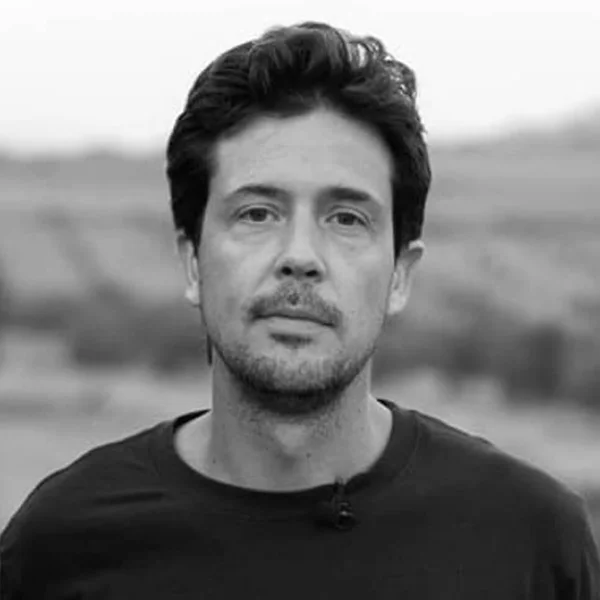
Nicolas is an environmental engineer specializing in Soil Biology and Regenerative Agriculture. His passion is to design productive agro-ecosystems in adversary climates. He has been working with the Permaculture Design framework for over 15 years, both in the private and public sector in the fields of environmental conservation, sustainable development, waste management and organic agriculture. Nicolas is also actively involved in the development, research and implementation of IoT, AI and blockchain technologies for use in smart farming and food traceability.
A passionate teacher and lecturer, Nicolas’ mission is to help speed up the world’s transition towards sustainable and circular production systems. Nicolas is currently the General Manager of Bio-Solea, a multi-disciplinary project in the Troodos mountains, which produces organic products and aspires to host a research center and the first ever high-end, self-sustained eco-lodge to be built in Cyprus. Nicolas acts as the leader of the “Agronomy and Planetary Health” group at the University of Yale Olive Institute. He has been awarded the rank of Knight of the Order of Agricultural Merit by the French Republic for his work in the field of agro-ecology.
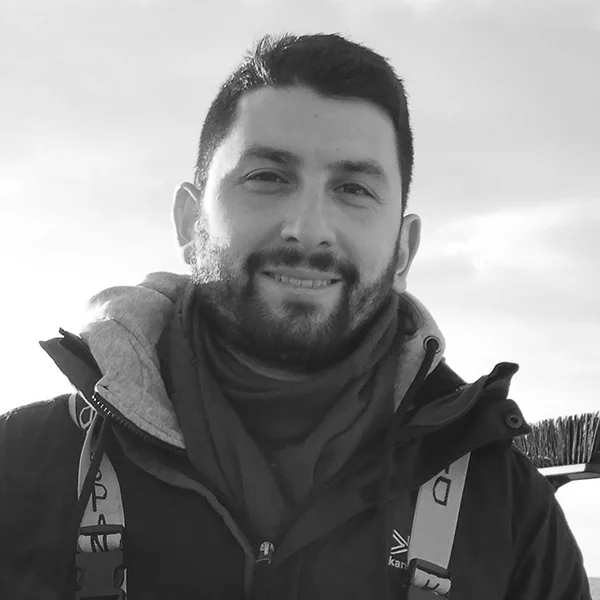
Marios Papageorgiou is the Executive Director and Head of Fisheries Research at the Enalia Physis Environmental Research Centre. He has extensive experience in fisheries research and management, holding Master’s degrees in Marine Biology and Business Administration, as well as a Bachelor’s degree in Marine Biology and Oceanography. Currently, he is pursuing a PhD in Fisheries Ecology and Management. He manages projects focused on fisheries and the bycatch of vulnerable species in Cyprus. His research interests encompass benthic ecology, fisheries ecology, shark and ray biology, ecology and conservation, invasive alien species, social-ecological systems, the blue economy and entrepreneurship, fisheries and ecological statistics, data visualization, and science communication.
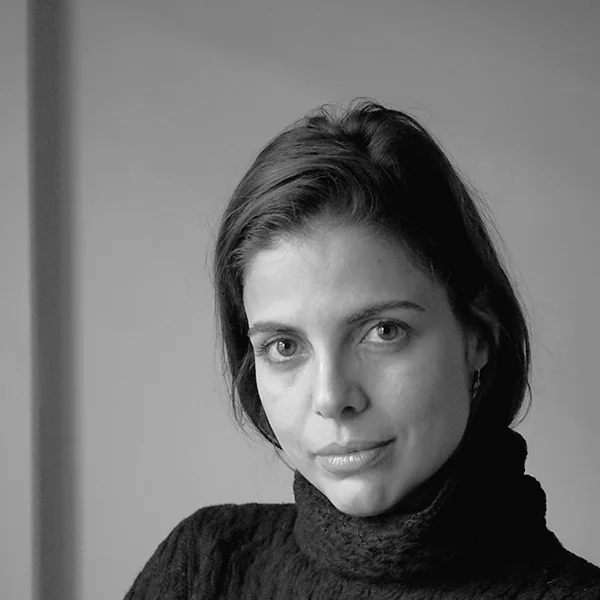
Kyriaki Goni’s multimedia installations critically and poetically examine the political, affective and environmental aspects of Big Tech. Her practice involves using various media including drawing, video, digital prints, textiles, websites, coding, poetry and sound. Goni explores the impacts of extractive practices on landscapes, human and non-human bodies, investigates other forms of intelligence (such as machines and plants), and creates alternative networks and infrastructures. Her installations seek to connect the local with the (inter)planetary, the speculative with the scientific, and to contemplate possible futures and new worlds. Goni’s work has been shown in solo exhibitions in Athens (Greece), Leeds (UK), Copenhagen (Denmark) and Berlin (Germany), as well as in group exhibitions, including at Kunsthall Trondheim (Norway), Warsaw Biennale (Poland) and Ars Electronica (Linz, Austria).
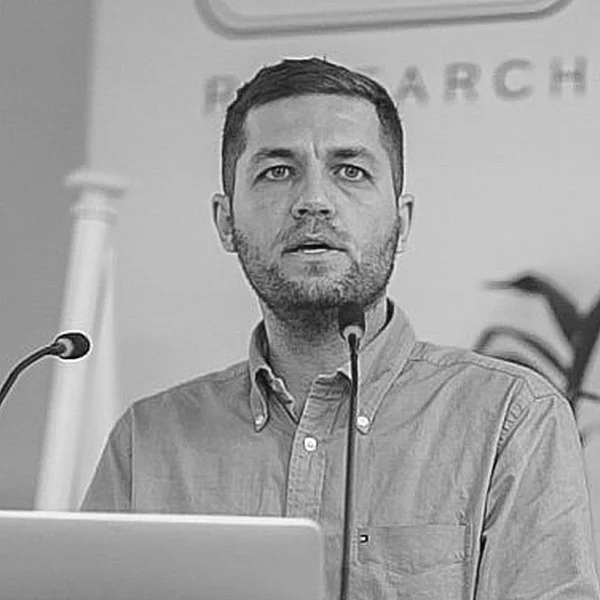
George Zittis is an Associate Research Scientist at the Climate and Atmosphere Research Center (CARE-C) of the Cyprus Insitute, where he leads the Climate Downscaling & Extremes Research Group. His research interests include climate change & impacts, regional climate modeling, Mediterranean climate, climate statistics, extreme weather events, land-atmosphere interactions, climate dynamics, climate change education & communication.
Dr. Zittis holds a BSc in Geology and an MSc in Meteorology, Climatology and Atmospheric Environment from the Aristotle University of Thessaloniki, Greece. He received his PhD in Environmental and Atmospheric Sciences from The Cyprus Institute in 2016. In the past, he has worked as a Post-Doctoral Fellow at the Max Planck Institute for Chemistry in Mainz, Germany, and the Energy, Environment and Water Research Center of The Cyprus Institute.
He is/was involved in several climate-related research projects such as OptimESM (HE), PREVENT (HE), EMME-CARE (H2020), SOCLIMPACT (H2020), BINGO (H2020), C8 (ERC) and CORDEX (WCRP). He has over 60 publications in peer-reviewed scientific journals, book chapters and conference proceedings.
Since 2020, Dr. Zittis has been an Editorial Board member of Springer’s Regional Environmental Change. He is a Steering Group Member of the MedCLIVAR scientific network, and he contributes to several initiatives about climate change and its impacts on the broader Mediterranean and Middle East region.
SELECTED PUBLICATIONS
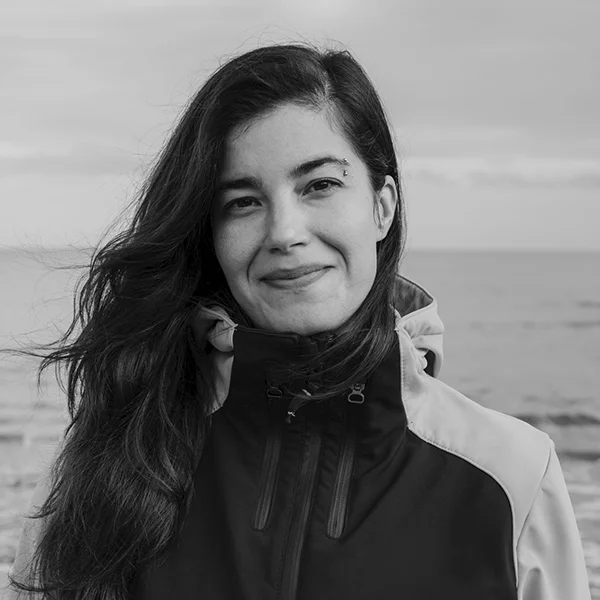
Andromachi Gkoulia is a marine ecologist specializing in Biological Oceanography and Applied Ecology. She is committed to studying the interplay between human activities and marine ecosystems. Her research focuses on the impact of anthropogenic pressures on biodiversity, emphasizing sustainable solutions that balance ecological health with societal demands through the lens of the Symbiocene concept – a vision of coexistence and regeneration within natural systems.
At the Fisheries Research Institute, she used zooplankton as indicators of ecosystem change, following Marine Strategy Framework Directive guidelines. Now, as an Assistant Scientist at the Cyprus Marine and Maritime Institute, she investigates rapid ecological transformations in the Southeastern Mediterranean. Combining science, management, and innovation, Andromachi works to protect the Mediterranean’s delicate marine habitats and organisms.
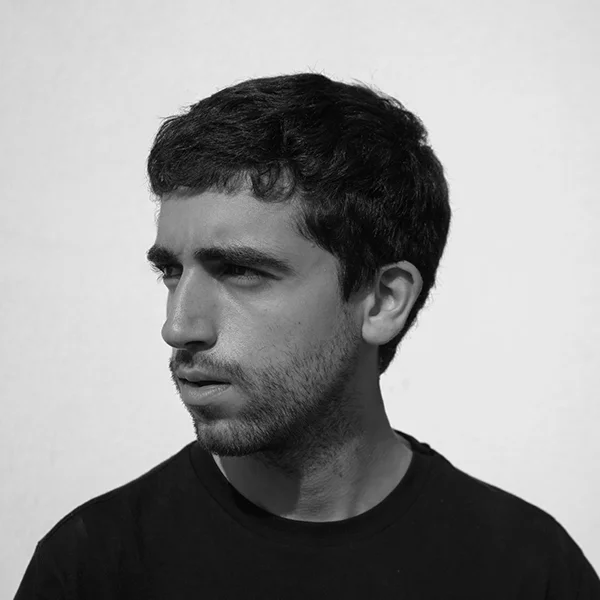
Miguel Teodoro (1997, Portugal) is a visual artist and researcher based between Portugal and the Netherlands. His research-based practice examines the interdependencies of materiality, geopolitics, ecology and visual culture through site-responsive and media- specific spatial interventions. His most recent body of work investigates the techno-scientific transformations of agricultural land and its correlation with the political and environmental history of imaging technologies – researching the impacts on soil fertility and its material and territorial manifestations. Teodoro holds an MA in Geo-Design from the Design Academy Eindhoven (NL) and a BA degree in Fine Arts from the University of Porto (PT). Teodoro is also a self- taught forager and farmer working towards merging his artistic and land-oriented practices under the same body of work.
LCC Member: Marios Papageorgiou
Senior Scientist: Kyriaki Goni
Selected Emerging Artist: Andromachi Gkoulia
Problem Statement
Climate change poses a significant threat to marine ecosystems, including the Mediterranean Sea. Rising sea temperatures, ocean acidification, and changing currents can disrupt the balance of marine biodiversity and alter the distribution of species. These changes create favourable conditions for the introduction and spread of marine alien species, which can have detrimental effects on native species and the overall ecosystem. In the Mediterranean Sea, the influx of marine alien species can lead to competition for resources, predation on native species, and the spread of diseases, further jeopardizing the fragile balance of the marine environment.
Addressing the impact of climate change on the Mediterranean Sea requires a multifaceted approach that includes monitoring and understanding the shifting patterns of marine alien species. By studying the interactions between native and alien species and their response to environmental changes, scientists and conservationists can develop strategies to mitigate the negative effects of these intrusions on the native biodiversity and ecosystems of the Mediterranean Sea. Additionally, raising awareness about the impact of climate change on marine ecosystems and the spread of marine alien species is crucial for fostering public support and driving collective action to protect the unique biodiversity of the Mediterranean Sea.
The Challenge
The challenge will be to raise awareness to consumers and the general public about the consumption of sustainable seafood products by specifically promoting the consumption of marine alien species. By doing this, the project will contribute to:
LCC Member: Nicolas Netien
Senior Scientist: Dr. George Zittis
Selected Emerging Artist: Miguel Teodoro
Problem Statement
In Cyprus, 51% of the island is facing critical danger of desertification due to changing rain patterns and excessive water usage in agriculture. Aquifers are being depleted, and erosion is accelerating. Sustainable land management practices are lacking.
The Challenge
Cyprus is experiencing a critical threat of desertification, with changing rainfall patterns exacerbating water scarcity and erosion. Unsustainable agricultural practices, utilizing 80% of water resources, contribute significantly. Addressing this issue requires implementing nature-based solutions, sustainable reforestation, and water-smart agriculture practices. These initiatives not only benefit Cyprus but also serve as a model for the wider MENA region.

CYENS Centre of Excellence is thrilled to announce its participation in the Studiotopia project, a remarkable collaboration with ten other leading European cultural and science organizations. This initiative marks the second phase of an inspiring journey that explores the intersection of art and science, shedding light on the pressing issues of our time.
In an era defined by unprecedented challenges, Studiotopia aims to harness the creative synergy between artists and scientists, focusing on one overarching theme: the Symbiocene. Coined by eco-philosopher Glenn Albrecht, this concept envisions a future where humanity lives in harmony with the Earth and all its inhabitants, fostering mutual flourishing and interconnectedness.
Through Studiotopia, our institution, alongside our partners, will engage in diverse collaborative projects that delve into the complexities of the Symbiocene. From exploring biodiversity hotspots to investigating sustainable technologies, each endeavor offers a unique perspective on our relationship with the natural world.
As catalysts for innovation and collaboration, we are committed to fostering dialogue and exchange across disciplines and borders. By bringing together the best minds in art and science, Studiotopia seeks to inspire new ways of thinking and acting in response to global challenges.
We invite you to follow the unfolding of Studiotopia, as it presents a rich tapestry of projects celebrating the beauty of interdisciplinary collaboration. Together, we aim to pave the way towards a more harmonious future for humanity and the planet.







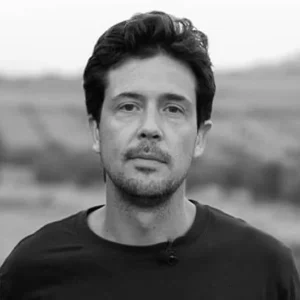
Nicolas is an environmental engineer specializing in Soil Biology and Regenerative Agriculture. His passion is to design productive agro-ecosystems in adversary climates. He has been working with the Permaculture Design framework for over 15 years, both in the private and public sector in the fields of environmental conservation, sustainable development, waste management and organic agriculture. Nicolas is also actively involved in the development, research and implementation of IoT, AI and blockchain technologies for use in smart farming and food traceability.
A passionate teacher and lecturer, Nicolas’ mission is to help speed up the world’s transition towards sustainable and circular production systems. Nicolas is currently the General Manager of Bio-Solea, a multi-disciplinary project in the Troodos mountains, which produces organic products and aspires to host a research center and the first ever high-end, self-sustained eco-lodge to be built in Cyprus. Nicolas acts as the leader of the “Agronomy and Planetary Health” group at the University of Yale Olive Institute. He has been awarded the rank of Knight of the Order of Agricultural Merit by the French Republic for his work in the field of agro-ecology.
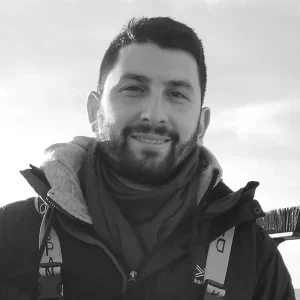
Marios Papageorgiou is the Executive Director and Head of Fisheries Research at the Enalia Physis Environmental Research Centre. He has extensive experience in fisheries research and management, holding Master’s degrees in Marine Biology and Business Administration, as well as a Bachelor’s degree in Marine Biology and Oceanography. Currently, he is pursuing a PhD in Fisheries Ecology and Management. He manages projects focused on fisheries and the bycatch of vulnerable species in Cyprus. His research interests encompass benthic ecology, fisheries ecology, shark and ray biology, ecology and conservation, invasive alien species, social-ecological systems, the blue economy and entrepreneurship, fisheries and ecological statistics, data visualization, and science communication.
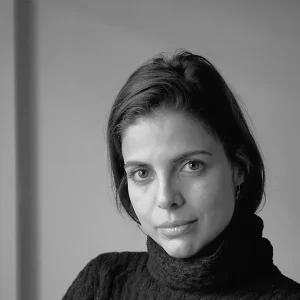
Kyriaki Goni’s multimedia installations critically and poetically examine the political, affective and environmental aspects of Big Tech. Her practice involves using various media including drawing, video, digital prints, textiles, websites, coding, poetry and sound. Goni explores the impacts of extractive practices on landscapes, human and non-human bodies, investigates other forms of intelligence (such as machines and plants), and creates alternative networks and infrastructures. Her installations seek to connect the local with the (inter)planetary, the speculative with the scientific, and to contemplate possible futures and new worlds. Goni’s work has been shown in solo exhibitions in Athens (Greece), Leeds (UK), Copenhagen (Denmark) and Berlin (Germany), as well as in group exhibitions, including at Kunsthall Trondheim (Norway), Warsaw Biennale (Poland) and Ars Electronica (Linz, Austria).
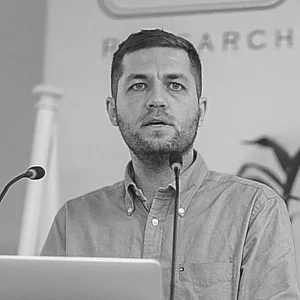
George Zittis is an Associate Research Scientist at the Climate and Atmosphere Research Center (CARE-C) of the Cyprus Insitute, where he leads the Climate Downscaling & Extremes Research Group. His research interests include climate change & impacts, regional climate modeling, Mediterranean climate, climate statistics, extreme weather events, land-atmosphere interactions, climate dynamics, climate change education & communication.
Dr. Zittis holds a BSc in Geology and an MSc in Meteorology, Climatology and Atmospheric Environment from the Aristotle University of Thessaloniki, Greece. He received his PhD in Environmental and Atmospheric Sciences from The Cyprus Institute in 2016. In the past, he has worked as a Post-Doctoral Fellow at the Max Planck Institute for Chemistry in Mainz, Germany, and the Energy, Environment and Water Research Center of The Cyprus Institute.
He is/was involved in several climate-related research projects such as OptimESM (HE), PREVENT (HE), EMME-CARE (H2020), SOCLIMPACT (H2020), BINGO (H2020), C8 (ERC) and CORDEX (WCRP). He has over 60 publications in peer-reviewed scientific journals, book chapters and conference proceedings.
Since 2020, Dr. Zittis has been an Editorial Board member of Springer’s Regional Environmental Change. He is a Steering Group Member of the MedCLIVAR scientific network, and he contributes to several initiatives about climate change and its impacts on the broader Mediterranean and Middle East region.
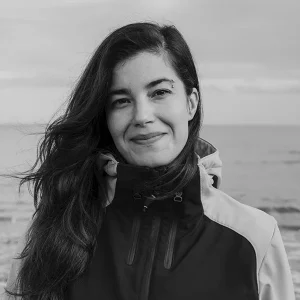
Andromachi Gkoulia is a marine ecologist specializing in Biological Oceanography and Applied Ecology. She is committed to studying the interplay between human activities and marine ecosystems. Her research focuses on the impact of anthropogenic pressures on biodiversity, emphasizing sustainable solutions that balance ecological health with societal demands through the lens of the Symbiocene concept – a vision of coexistence and regeneration within natural systems.
At the Fisheries Research Institute, she used zooplankton as indicators of ecosystem change, following Marine Strategy Framework Directive guidelines. Now, as an Assistant Scientist at the Cyprus Marine and Maritime Institute, she investigates rapid ecological transformations in the Southeastern Mediterranean. Combining science, management, and innovation, Andromachi works to protect the Mediterranean’s delicate marine habitats and organisms.
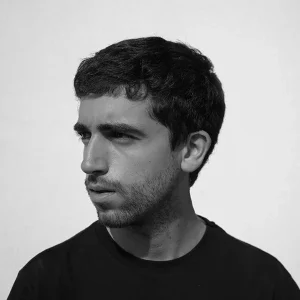
Miguel Teodoro (1997, Portugal) is a visual artist and researcher based between Portugal and the Netherlands. His research-based practice examines the interdependencies of materiality, geopolitics, ecology and visual culture through site-responsive and media- specific spatial interventions. His most recent body of work investigates the techno-scientific transformations of agricultural land and its correlation with the political and environmental history of imaging technologies – researching the impacts on soil fertility and its material and territorial manifestations. Teodoro holds an MA in Geo-Design from the Design Academy Eindhoven (NL) and a BA degree in Fine Arts from the University of Porto (PT). Teodoro is also a self- taught forager and farmer working towards merging his artistic and land-oriented practices under the same body of work.
LCC Member: Marios Papageorgiou
Senior Scientist: Kyriaki Goni
Selected Emerging Artist: Andromachi Gkoulia
Problem Statement
Climate change poses a significant threat to marine ecosystems, including the Mediterranean Sea. Rising sea temperatures, ocean acidification, and changing currents can disrupt the balance of marine biodiversity and alter the distribution of species. These changes create favourable conditions for the introduction and spread of marine alien species, which can have detrimental effects on native species and the overall ecosystem. In the Mediterranean Sea, the influx of marine alien species can lead to competition for resources, predation on native species, and the spread of diseases, further jeopardizing the fragile balance of the marine environment.
Addressing the impact of climate change on the Mediterranean Sea requires a multifaceted approach that includes monitoring and understanding the shifting patterns of marine alien species. By studying the interactions between native and alien species and their response to environmental changes, scientists and conservationists can develop strategies to mitigate the negative effects of these intrusions on the native biodiversity and ecosystems of the Mediterranean Sea. Additionally, raising awareness about the impact of climate change on marine ecosystems and the spread of marine alien species is crucial for fostering public support and driving collective action to protect the unique biodiversity of the Mediterranean Sea.
The Challenge
The challenge will be to raise awareness to consumers and the general public about the consumption of sustainable seafood products by specifically promoting the consumption of marine alien species. By doing this, the project will contribute to:
LCC Member: Nicolas Netien
Senior Scientist: Dr. George Zittis
Selected Emerging Artist: Miguel Teodoro
Problem Statement
In Cyprus, 51% of the island is facing critical danger of desertification due to changing rain patterns and excessive water usage in agriculture. Aquifers are being depleted, and erosion is accelerating. Sustainable land management practices are lacking.
The Challenge
Cyprus is experiencing a critical threat of desertification, with changing rainfall patterns exacerbating water scarcity and erosion. Unsustainable agricultural practices, utilizing 80% of water resources, contribute significantly. Addressing this issue requires implementing nature-based solutions, sustainable reforestation, and water-smart agriculture practices. These initiatives not only benefit Cyprus but also serve as a model for the wider MENA region.


